

History of Tam Bao Pagoda
HISTORY OF TAM BAO PATRIARCHAL TEMPLE (DA NANG)
ORIGINS OF CENTRAL VIETNAM'S THERAVADA BUDDHISM AND THE LINEAGE FLOW ACROSS ERAS
I. The Auspicious Beginning and Context of the Establishment of the Patriarchal Temple
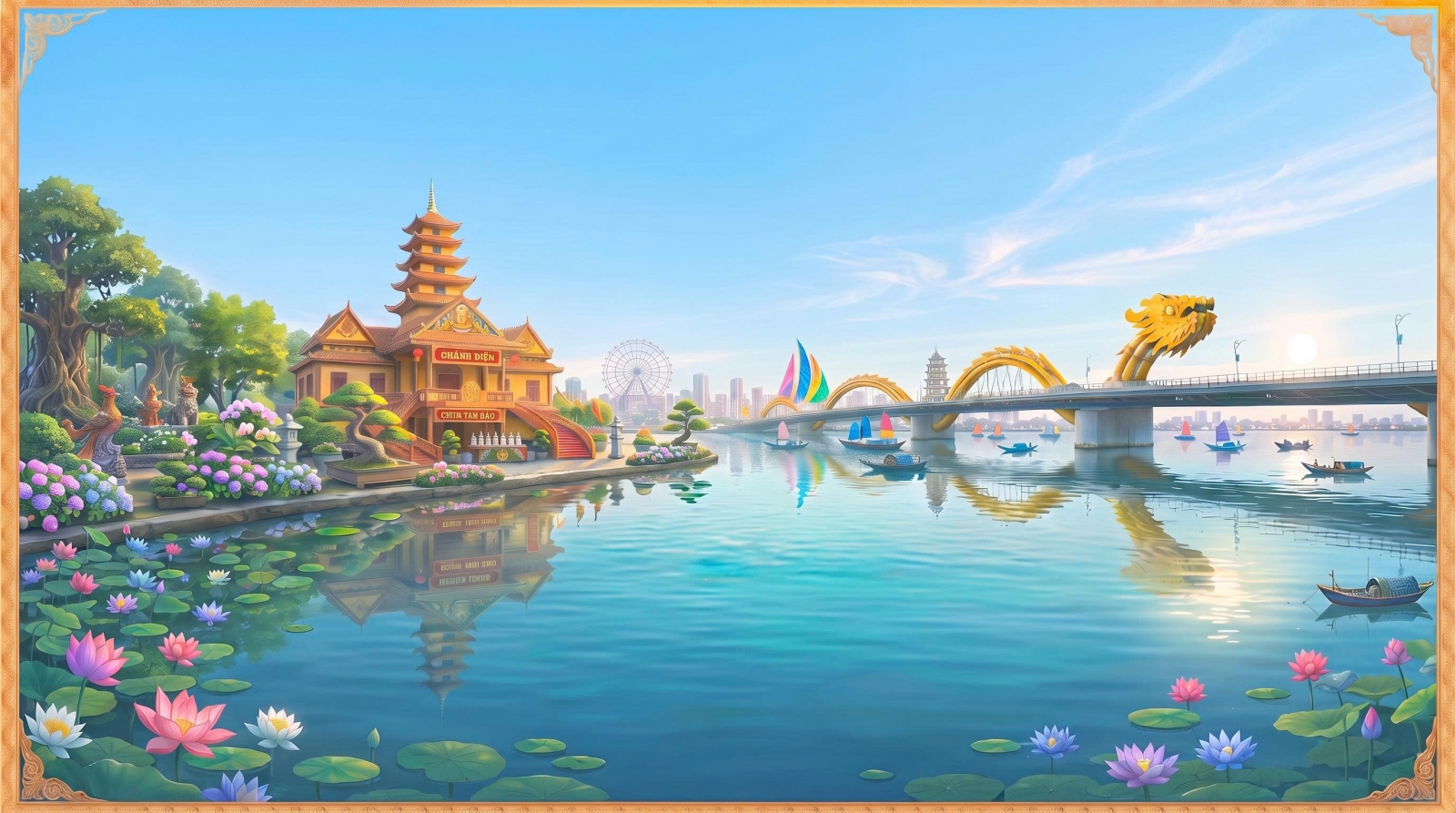
Da Nang City—where the peaceful Han River merges into the vast ocean—has long been a convergence point of cultural exchange, known for its gentle, hospitable people and rich spiritual traditions. Amidst this vibrant coastal metropolis, located at 323 Phan Chau Trinh Street (Binh Hien/Phuoc Ninh Ward, Hai Chau District), Tam Bao Pagoda (Tam Bao Theravada Patriarchal Temple) stands proudly as a tranquil sanctuary, perfectly preserving the pure stream of pristine Early Buddhist teachings.
Tracing back to the early 1950s, when the light of Theravada Buddhist Dhamma began spreading from the South to the Central region, venerable senior predecessors recognized the need to establish a foundational practice center to propagate the Pali Tipiṭaka. In 1953, the late Most Venerable Thích Giới Nghiêm (Thitasila Mahāthera) aspired to found and construct the Tam Bao monastery. Thanks to the persistent and joint support of devoted Buddhists from all directions, the temple gradually took solemn shape. Since this milestone year of 1953, Tam Bao Pagoda has officially become the first Patriarchal Temple, serving as the originating source and center of study for the Theravada Buddhist lineage in the Central region.
II. Monastic Architecture, Sacred Relics, and the Cham-pa Buddha Flower Garden
Tam Bao Patriarchal Temple bears the distinctive architecture of Southeast Asian Theravada Buddhism harmoniously combined with indigenous cultural space:
1. Architecture of the Main Hall, Stupa, and Royal Thai Dharma Treasures:
The monastery is built solemnly with curved multi-tiered roofs characteristic of the Theravada tradition. The center of the Main Hall exclusively enshrines the revered statue of the Buddha Shakyamuni seated upon a serene lotus throne.
On the highest level stands the majestic stupa enshrining the Buddha's Relics—a sacred spiritual treasure respectfully throned from overseas, bringing peace and blessings to the meditative realm.
This place preserves many dharma treasures and historical memorabilia associated with the Thai Royal Family and international Sangha across various eras:
- 1953 & 1960s: The Royal Family of Thailand offered 2 cabinets of Thai Pali Tripitaka scriptures, ancient palm-leaf scriptures inscribed with sacred letters, solemnly gilded red-lacquered altar tables for the Triple Gem, and a set of historical paintings depicting the life of Buddha Shakyamuni painted in 1963.
- 2010: A diplomatic landmark marked by the commemorative plaque from His Majesty King Bhumibol Adulyadej (Rama IX) of Thailand presenting the Kathina robe offering at Tam Bao Pagoda on November 14, 2010.
- In addition, the inner sanctum and lecture hall enshrine numerous traditional dharma seats, gongs, and bronze drums respectfully offered by visiting Lao Buddhist delegations during cultural exchange visits.
2. The Bodhi Trees, Sala Trees, Dok-khun Flowers, and Cham-pa Buddha Flower Garden:
Within the shaded grounds of the temple stand two ancient Bodhi trees propagated from the sacred Bodhi trees of the holy sites in India and Sri Lanka, presented by Most Venerable Narada Mahāthera in the 1960s, alongside two luxuriant Sala (Cannonball) trees radiating pure fragrance. Interspersed nearby is the vibrant golden hue of the Dok-khun tree (Golden Shower tree / Cassia fistula) – the elegant national flower of Thailand emitting a refreshing fragrance every summer.
Particularly, within the quiet gardens lies the ancient Cham-pa Buddha Flower Garden – a uniquely contemplative landscape. Beneath centuries-old Cham-pa trees diffusing a gentle fragrance are enshrined systems of Buddha and Arahant statues exquisitely carved from natural Non Nước stone originating from Da Nang's renowned traditional craft village:
- The statue of Bodhisattva Siddhattha's Nativity (Lumbini) with one hand pointing to the sky and one to the earth majestically upon a sacred lotus;
- The Standing Buddha Bestowing Blessings with a compassionate and protective posture;
- The tranquil and serene Reclining Buddha entering Parinibbana;
- The statue of Elder Sīvali – the symbol of merit and auspicious fluency;
- The statue of the Buddha's Enlightenment beneath the sacred Bodhi tree;
- The statue of the Begging-Bowl Carrying Buddha on Alms-round, austere and transcendent;
- The statue of Bodhisattva Avalokiteshvara meditating peacefully, listening to the cries of the world.
3. The Solemn Bronze Relief Wall and National Historical Imprint:
Encompassing the meditative garden space is a solemn bronze-toned relief wall vividly portraying iconic Buddhist sacred sites of both the Theravada and Mahayana traditions. Prominent among them are the image of the One Pillar Pagoda – a thousand-year spiritual cultural symbol of Thang Long – Hanoi; alongside a sacred relief recreating the beloved Uncle Ho under the alias Thầu Chín wearing the robes of a Theravada monk going on alms-round in Udon Thani (Thailand) during his revolutionary years seeking a path to national salvation. This artistic work represents a harmonious, profound integration between the Dhamma and the nation, bearing witness to patriotism and the long-standing cultural bond between Vietnam and neighboring Southeast Asian countries.
The Cham-pa Buddha Flower Garden is not only a quiet walking meditation spot for monks and Buddhists, but has long become a familiar spiritual living space for the Consulate General, the expatriate community, and generations of Lao students in Da Nang. Under the shade of Cham-pa flowers blending with the color of Dok-khun blossoms, Pali chanting sessions for well-being, traditional wrist-tying ceremonies, and warm friendship gatherings have taken place intimately, uniting two fraternal nations.
III. The Imprint of Lineage Across Abbots' Eras
The endurance of Tam Bao Patriarchal Temple for over seven decades is closely tied to the spiritual practice, missionary career, and continuous succession of venerable Abbots across various periods:
1. Period 1953 – 1983: Late Most Venerable Thích Giới Nghiêm
(Founder of the Patriarchal Temple, Former Supreme Patriarch of the Vietnamese Primitive Buddhist Sangha Order, Member of the Council of Proof, Vice Chairman of the Executive Council of the Vietnam Buddhist Sangha)
- Biography and Founding Merits: Venerable Giới Nghiêm (secular name Nguyễn Đình Trấn, 1921 – 1984) was an eminent and virtuous master of Vietnamese Buddhism. After over a decade of studying abroad in Cambodia and Thailand, and practicing the Four Foundations of Mindfulness (Satipatthana) meditation in Myanmar under Meditation Master Mahāsī Sayādaw, he returned home with the aspiration to propagate pristine Theravada Buddhism.
- Establishing Foundations for Dhamma Work, Education, and Healthcare in the Central Region: In 1953, he laid the first stone to found Tam Bao Pagoda in Da Nang. Throughout his 30-year abbotship, he cultivated this place into a complete study and practice complex:
- Founded the Tam Bao Primary Buddhist Institute to train the first generation of foundational monastic pillars for the lineage;
- Opened the Tam Bao Bodhi Private School providing free literacy and moral education for children of impoverished compatriots;
- Established the first standard Vipassana meditation center in the Central region practicing abdominal Rising-Falling contemplation;
- Founded the Tue Tinh Duong Tam Bao Traditional Medicine Clinic providing free pulse-taking and herbal medicine treatment for poor working people.
- Serving the Sangha and Assisting Neighboring Buddhism: He served as Supreme Patriarch of the Vietnamese Primitive Buddhist Sangha across 4 terms. In September 1979, he joined a delegation to Cambodia as Preceptor to transmit ordination, helping restore neighboring Buddhist monastic orders after the Pol Pot genocide, reinforcing lasting relations between the two neighboring countries. In 1981, he joined the Council of Proof and was appointed Vice Chairman of the Executive Council of the Vietnam Buddhist Sangha for Term I.
2. Period 1983 – 2019: Most Venerable Thích Pháp Cao
(Eminent virtuous master of strict discipline, lifelong patient in service and selfless relinquishment, Member of the Council of Proof of the Vietnam Buddhist Sangha, Prover of the Executive Board of the Vietnam Buddhist Sangha of Da Nang City)
- Succession and Maintenance of the Dhamma Lineage from 1983: Before the late Most Venerable Thích Giới Nghiêm passed away, recognizing his disciple's humble character and steadfast patience, the Master entrusted him with the stewardship responsibility. In 1983, Most Venerable Thích Pháp Cao (born 1951, ordained at age 13 at Tam Bao Pagoda) officially assumed the abbotship of Tam Bao Patriarchal Temple.
- Caring for Temple Operations Across Monasteries: Throughout his journey of service, he persistently preserved the Dhamma lineage through various temporal hardships, restoring Tam Bao Patriarchal Temple to increasing solemnity while tending to Nam Quang Pagoda (Hoi An) and Thai Binh Pagoda (Dien Ban). He devoted compassionate care to supporting female monastics by facilitating the establishment of the Bhikkhunī Nun Order, founding Sala Meditation Hermitage, and maintaining regular Four Foundations of Mindfulness meditation practices.
- Filial Piety and the Spirit of Relinquishment: In his youth as a novice, he diligently labored to serve his Teachers, teaching literacy to poor children at the Bodhi Private School of Phat Bao Pagoda; upon serving as abbot of Nam Quang Pagoda, he welcomed his elderly mother to ordain as nun Thiện An and personally cared for her until her peaceful passing. In 2019, at age 68, he proactively arranged monastic administrative procedures to nominate his disciple, Venerable Thích Pháp Hiếu, to succeed as Abbot of Tam Bao Patriarchal Temple, before gracefully stepping back to the Proof rank to peacefully meditate.
3. Period 2019 – Present: Venerable Thích Pháp Hiếu
(Member of the Central International Buddhist Affairs Committee of the VBS, Standing Member cum Permanent Deputy Head of the International Buddhist Affairs Committee of the VBS of Da Nang City, Abbot of Tam Bao Patriarchal Temple)
- Succession and Cultivation of Dhamma Learning: Venerable Thích Pháp Hiếu (secular name Lương Phước Toàn, born 1983) was nurtured in study and practice by his Master, Most Venerable Thích Pháp Cao, from childhood under the roof of Nam Quang Pagoda. He received novice ordination in Hue with Most Venerable Hộ Nhẫn, subsequently traveled to Myanmar to receive higher Bhikkhu ordination in 2003 at Mahavisuddha-yon Monastery (Yangon) and completed a Master's degree in Pali Buddhist Studies in Sri Lanka.
- Continuity and Development of Buddhist Affairs: Officially taking over as Abbot in 2019, the Venerable has beautified the temple landscape, maintained traditional meditation routines, promoted social welfare activities, and expanded international Buddhist exchanges. In recognition of his persistent service contributions, he was awarded the honorary title "Lokattha Cariya" (Master of Humanitarian Service) by the Sri Lankan Sangha, alongside numerous Certificates of Merit from the People's Committee of Da Nang City and Sangha levels.
IV. Annual Ceremonial Calendar, Regular Practice Schedule, and Social Welfare Work
As a representative Theravada Buddhist practice center, Tam Bao Pagoda maintains a solemn routine of activities spanning all four seasons:
1. Annual Major Religious Ceremonies:
- New Year's Eve – Lunar New Year Welcoming (Dec 30 to the 15th of the Lunar 1st Month): The temple organizes sacred New Year's Eve welcoming, solemnly conducts Prayers for National Peace and Prosperity, and Memorial Services to express gratitude to past Master Preceptors and Heroic Martyrs who sacrificed for the country.
- Full Moon Festival of the 1st Lunar Month (15th – 16th of the 1st Lunar Month): Early spring well-being prayers, traditional Theravada alms-offering assembly (Pindapata) to support the Sangha, Dhamma talks, and chanting to bless all households.
- Vesak Celebration – Buddha's Birthday (15th – 16th of the 4th Lunar Month): Setting up the altar stage to celebrate the Buddha's Birth, solemnly organizing alms-offering assemblies, Dhamma talks, Tipitaka chanting, and requiems for departed souls.
- Spring Meditation Retreat (Vipassana): Held periodically from May 1 to May 16 (Solar Calendar), creating favorable conditions for monastics and Buddhists to practice Satipatthana meditation and restrain body and mind.
- Summer Youth & Buddhist Family Retreat (10 days): Held from June 6 to June 16 (Solar Calendar). Participants learn Triple Gem bowing deportment, meditative sitting, study Buddhist scriptures, emulate the Compassionate World-Honored One's virtues, combined with moral activities to cultivate virtuous character.
- Vassa (Rains Retreat) & 3-Month Retreat:
- Vassa Entry Ceremony (15th of the 6th Lunar Month): Ancient Buddha alms-going ritual, offering meals to the Sangha, and officially opening the Vassa retreat according to Theravada Vinaya tradition.
- Vassa Retreat Period (June 14 to September 24 Lunar Calendar): Throughout the 3 months of the rains retreat, monastics, youth leaders, Buddhist Family members, and devotees unite to restrain body and mind, intensively studying scriptures and meditating.
- Vu Lan Filial Piety Festival (13th – 16th and 26th of the 7th Lunar Month): Spiritual highlights include the Anniversary Memorial Service for the late Most Venerable Thích Giới Nghiêm and late Most Venerable Thích Hộ Tông; combined with alms-offering assemblies to the Sangha, Vu Lan Dhamma talks, prayers for living parents, and grand requiems honoring Teachers, Ancestors, and Heroic Martyrs.
- Mid-Autumn Festival Celebration (14th – 15th of the 8th Lunar Month): Organizing lantern processions, distributing gifts and cakes to disadvantaged children locally, combined with alms-offering well-being prayers for families.
- Vassa Conclusion – Pavarana Ceremony (15th of the 9th Lunar Month): Monastics perform the Pavarana confession ritual, concluding 3 months of pure rains retreat.
- Kathina Robe Offering Week (18th to 24th of the 9th Lunar Month): The supreme traditional annual festival of Theravada Buddhism. Rituals are conducted solemnly with robe-carrying processions around the Main Hall, blessing chants, Dhamma talks offering to the Sangha, offering of four requisites, and merit transference.
2. Weekly and Daily Practice and Educational Schedules:
- Every Sunday – Peaceful Meditation Day: Devoting the entire day (8:00 AM to 9:00 PM) for devotees and Buddhist Family members to come to the temple for sitting meditation, Dhamma listening, scriptural study, and youth activities.
- Uposatha and Repentance Observances (14th and 30th Lunar dates, 29th for short months): Monastics perform Uposatha Vinaya recitation; lay Buddhists gather in repentance, observing the Triple Gem, Five Precepts, and Eight Precepts from 7:00 PM to 9:30 PM.
- Nightly Chanting and Meditation Sessions: Regularly maintained from 7:00 PM to 9:00 PM nightly, helping local devotees find refuge in the sanctuary, relieve anxiety, and cultivate inner peace.
- Free English and Pali Classes: Held every evening (5:30 PM to 9:00 PM), organized entirely free by the temple for Buddhist children and disadvantaged youth, broadening cultural and linguistic knowledge for the younger generation.
3. Charitable and Social Welfare Work:
Tam Bao Patriarchal Temple consistently upholds the spirit "Serving sentient beings is practical offering to the Buddhas":
- Annually, the temple mobilizes devotees and benefactors to distribute food and charitable necessities directly to poor households and people with disabilities during major festivals: Lunar New Year, Vesak, and Vu Lan Filial Piety Festival.
- Coordinating with local authorities and social organizations to support building compassion houses for impoverished compatriots in Quang Nam – Da Nang.
- Promptly providing relief aid to compatriots affected by storms and floods in the Central region; awarding scholarships to lift up studious poor students; sharing difficulties with lonely elderly people and critically ill patients.
- Participating in humanitarian blood donation activities, propagating civilized lifestyles; organizing requiems honoring Heroic Martyrs and deceased compatriots.
V. Spiritual Bridge of Connection and Friendly Exchange
Preserving pristine Theravada Buddhist traditions with Pali chanting practices parallel to regional nations, Tam Bao Patriarchal Temple has become a familiar spiritual exchange address in the heart of Da Nang City:
- Homestay Program and Spiritual Sanctuary for Lao International Students: The temple actively participates in the "Homestay" program launched by local authorities and the Friendship Association. The temple sponsors Vinaya-compliant lodging and meals for visiting monks and Lao students studying in Da Nang. Here, young people learn Vietnamese for free, participate in weekend ceremonies, and find warm comfort as if at home.
- Celebrating Southeast Asian Traditional New Years: Annually, the temple coordinates with the Consulate General of the Lao PDR in Da Nang to solemnly celebrate the traditional Bunpimay New Year (April 14) with Buddha bathing, wrist-tying blessing rituals (Sukhwan), alongside celebrating Chol Chnam Thmay (Cambodia) and Songkran (Thailand).
- Pilgrimage Destination for International Buddhist Delegations: The temple frequently welcomes diplomatic delegations, monastics, and Buddhists from Laos, Thailand, Cambodia, Sri Lanka, Myanmar, India, etc., to offer incense, worship the Buddha, plant commemorative trees, and engage in cultural exchanges, strengthening friendly people-to-people bonds.
VI. Cultural Space and Spiritual Experience in the Coastal Metropolis
More than just a conventional place of worship, Tam Bao Patriarchal Temple today is a tranquil spiritual cultural destination for Buddhist followers and travelers visiting Da Nang City:
- A Peaceful Pause Amidst Urban Life: Stepping through the triple gate at 323 Phan Chau Trinh, the bustling city rhythm pauses. Space unfolds beneath the shade of ancient Bodhi trees, the pure fragrance of Cham-pa flowers, the vibrant gold of Dok-khun blossoms, and the warm resonant temple bell, offering lightness and coolness to the soul.
- Artistic Heritage and Cultural Pilgrimage Space: Visitors have opportunities to admire historical Dharma treasures of the Thai Royal Family, Bodhi trees from India's sacred Buddhist sites, and exquisite Non Nuoc stone sculptures in the Cham-pa Buddha Flower Garden. The solemn bronze relief wall portraying sacred Buddhist sites, the One Pillar Pagoda, and Uncle Ho (during his revolutionary period in Thailand) evokes profound emotion regarding the connection between the Dhamma and national destiny.
- Open Sanctuary Welcoming Inner Peace: Tam Bao Pagoda always joyfully welcomes everyone seeking meditation practice. Anyone seeking mental balance can join nightly Vipassana meditation sessions or Sunday peaceful meditation days, listening to rustic Pali chanting to cultivate loving-kindness and inner peace.
VII. Development Orientation: Continuing Tradition and Constructing Study Infrastructure
Having sheltered generations of monastics and Buddhists for over seven decades, the existing single-story activity building of Tam Bao Patriarchal Temple has degraded over time. Addressing the increasingly crowded meditation study needs of the masses, especially spring meditation retreats, summer retreats, and Vassa retreats drawing 200 to 300 practitioners, upgrading facilities has become an essential Buddhist project.
Continuing the aspiration of the Predecessors from 1953, Abbot Venerable Thích Pháp Hiếu and the Sangha are gradually implementing the project to construct a 4-story Meditation Hall, Buddhist Study Hall, and Multi-purpose Residential Complex on the site of the old building, with primary service orientations:
- Constructing a Solemn Meditation Hall and Buddhist Study Hall: Serving Vipassana meditation practice and research and study of Pali Tripitaka scriptures;
- Disciplined Residential Study Quarter: Ensuring safe, cozy accommodation conditions for practitioners, retreatants, and monastics to practice in peace; fully continuing the humanitarian relief aspiration laid down by the Founding Patriarch since inception.
For this meaningful Buddhist project to be successfully accomplished soon, the joint assistance, merit-building, and support of devout male and female believers, wise friends, and benefactors near and far are greatly needed. Every contribution of offering is an auspicious seed placed into the foundation of the Dhamma, empowering the project's early completion to fulfill the practical study aspirations of many children of the Buddha.
Conclusion
Spanning nearly a century of formation and development, Tam Bao Patriarchal Temple in Da Nang stands as a historical witness to the integration and prosperity of Theravada Buddhism across the Central region. From the pioneering foundational merits of the late Most Venerable Thích Giới Nghiêm, the patient preservation of Most Venerable Thích Pháp Cao, to the dedicated service spirit of Venerable Thích Pháp Hiếu today, Tam Bao Patriarchal Temple will forever remain a peaceful sanctuary for Buddhists and compatriots near and far, illuminating the principles of compassion, harmony, and serving both religion and nation.